


Best Fig Varieties for Pots vs. Planting in the Ground: My Master List


Every fig variety does well in a dry climate. In a humid climate, whether a fig is in a pot or in the ground can make or break the fruit.
Hey there, fig growers! I'm Ross, the "Fig Boss," and I've dedicated my life to this amazing fruit since 2014. I've trialed about 400 to 500 fig varieties here in the Philadelphia area, zone 7a, and I'm speaking as someone who grows in a humid climate. Figs are not meant to be grown in humid climates, so here the challenges are real.
People ask me all the time which figs to keep in pots and which ones to plant. So I created a master list: my take on every variety I've trialed, whether it does really well in a pot, is much better in the ground, or is one of the rare figs that actually got worse once I planted it.
If you're still deciding whether to grow in pots at all, start with my overview of fig trees in pots vs. the ground. And if you think you need a dwarf fig for a container, read the truth about dwarf fig trees first. This article is the variety-by-variety list.
How I Decide: Pots First, Then the Ground
I trial every new variety in a pot for two to three years. If I like it and it suits a humid climate, it goes in the ground.
In a pot, I gather the data points that matter most in a humid climate. That takes only about two or three years:
Taste: What does the fruit actually taste like once the tree is producing properly?
Hang time: How long it takes a fig to go from green and hard to fully ripe. Ideally that's about four to five days. Here, the average is about six or seven.
Rain and split resistance: Does the fig hang down with its eye protected, or point the eye at the sky? How long are the stem and neck? Does it dry on the tree?
Ripening season: Early, mid-season, or late.
If a variety passes, I plant it in the ground, usually from a 1-gallon 4 x 9-inch Treepot or a 3-gallon pot. Over the next three to seven years, I find out whether it's hardy. Altogether, it can take about seven years before I really know I have something special.
One more rule for this list: for a fig to count as good in a pot, it needs to taste good, produce well, and, if it makes a breba crop, ripen brebas of pretty high quality.
Why Most Figs Get Better in the Ground
Most fig varieties do better once they're planted and have matured in the ground for a few seasons. Their rain and split resistance usually improves too.
A tree in the ground has a bigger root system, and so more energy available to it, than a tree in a pot that constricts its roots. The figs generally form longer stems and longer necks, so they hang better and are better protected from moisture.
It has nothing to do with the soil itself. It's the size of the crown of the root system. Once that root system gets big enough, the tree gets the water and nutrients it needs and isn't easily affected by too much or too little water. In humid regions like the Northeast, the Mid-Atlantic, and the Deep South, water is the number one enemy of fruit quality, and it's a lot easier to drown a fig tree in a container.
Hang time improves too. For years I called White Triana a long hang time variety. Once it was established in the ground, its hang time dropped by almost half, from about 12 days to about six.
The best-quality figs I harvest come from in-ground trees, not potted trees. Survival is different too: my in-ground trees have about a 99% winter survival rate, while I always lose some trees in pots.
How Hardy Are Fig Trees, Really?
We don't really know how hardy most fig varieties are. A lot of that comes down to lignification, not genetics.
Even people who've tested varieties extensively in the ground, unprotected, may not have done it properly. If the branches aren't lignified, they can take damage at only 20 or even 25°F.
Most varieties: Hardy to somewhere between 5 and 10°F.
Below 5°F: They really don't like it. That's the limit I think of.
0°F or below: Very few, if any, survive. When one does, the temperature usually hit zero and quickly rose back up.
A real test: Temperatures below 5°F for an extended period. We don't get that every winter, and a young tree usually needs until about its fourth season in the ground before it can show its true hardiness.
That's why the ground column in my master list is about fruit quality, not hardiness. For hardiness, see my list of cold-hardy fig varieties.
The Master List: 90 Fig Varieties, Pots vs. Ground
Here's every variety on my list, rated by how it performs for me in a humid climate. Search the table, then read the breakdowns below.
Where I list two names together (like Kadota and Peter's Honey), they're synonyms, or synonyms for the most part. For more on that, see my guide to fig variety synonyms.
Best Fig Varieties for Pots
These are the figs that taste great, produce well, and give good brebas (if they make them) while still in a container. Many get even better in the ground, but you won't be disappointed growing them in a pot.
Moro de Caneva

One of the best figs I grow in a pot. Moro de Caneva did well in a pot for me and continued to do well in the ground, where it's even better. It also produces an excellent, plentiful breba crop.
Improved Celeste
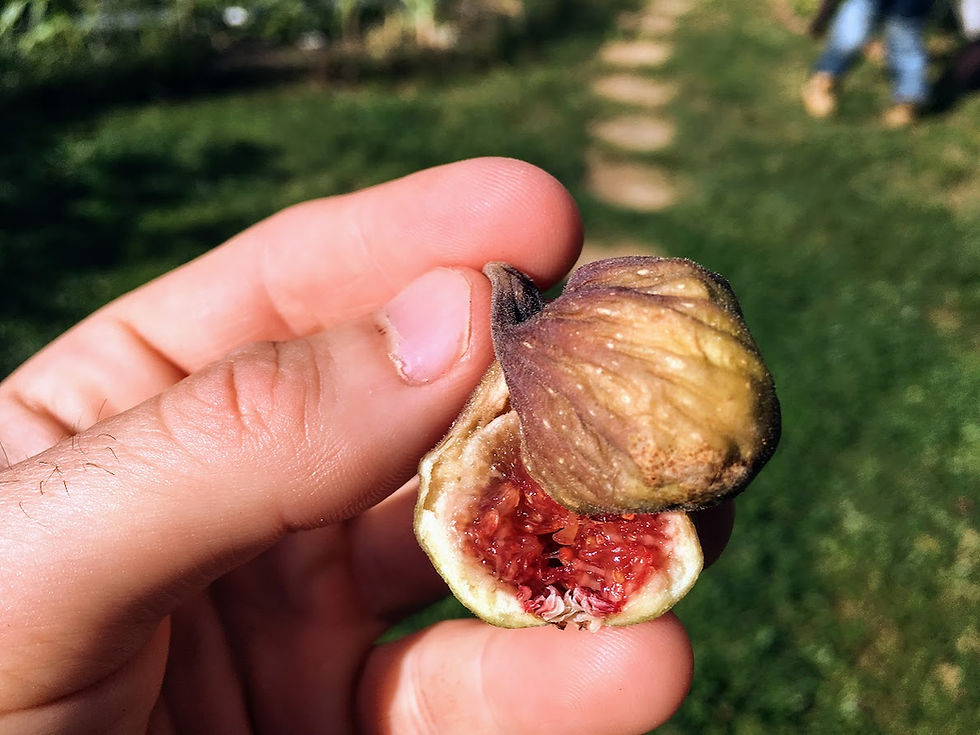
Improved Celeste is exceptional in pots, one of the best, and it also does well once it's planted in the ground.
Get it: Improved Celeste fig tree | The Celeste family
Corio Provence

Corio Provence is one of the few varieties I'd say does really well in pots. It's very productive and the flavor is exceptional. It also does really well in the ground, and I expect it to keep improving there.
Get it: Corio Provence fig tree | Corio Provence review
Marseillaise

Don't confuse it with White Marseilles. Marseillaise is a very different fig, and it's an exceptional fig when grown in pots. One of the best, I would argue.
Get it: Marseillaise fig tree
Smith
Smith is really good for pots, one of the best varieties for containers, and it can also excel when planted. I don't see a huge difference between my potted and in-ground trees. And forget its reputation as the least hardy fig variety in existence: a Smith I planted in zone 7b at the Jersey Shore took no damage after a brutal winter, and my Texas BA-1 has been one of the more hardy fig trees I have.
Get it: Smith fig tree | Smith review
Verdino del Nord (Figoin)

Verdino del Nord, also known as Figoin, is one of the best figs for pots, and it does really well in the ground too. It's a slower-growing Italian heirloom with a short hang time and a fantastic ability to dry on the tree.
Salam and Verdolino

These two are synonyms of each other for the most part, and they taste very similar. Both are really exceptional for pots, specifically Salam. The difference I see: Salam seems to do better in pots, while Verdolino does better in the ground. Verdolino has a super long stem and long neck, so the figs hang down really well and handle rain really well.
Get it: Salam fig tree | Verdolino fig tree | Verdolino review
Kadota (Peter's Honey, Dottato)

Kadota and Peter's Honey are synonyms, and Dottato is another name for it. It's very good in pots, one of the better varieties for containers, but probably even better in the ground.
Nerucciolo d'Elba

Great in both scenarios, and actually one that's exceptional for pot culture. It can produce lots of breba. Like Verdino del Nord, it's a slower-growing Italian heirloom with a short hang time that dries well on the tree.
Get it: Nerucciolo d'Elba fig tree
Pissalutto

Very good in both scenarios. Actually, Pissalutto is a very good variety for pots.
Get it: Pissalutto fig tree
Pel de Bou

Exceptional in both scenarios. I'd argue Pel de Bou and Pernette Noire are both very good for pots.
Get it: Pel de Bou fig tree
Pernette Noire

Exceptional in both scenarios, and, like Pel de Bou, very good for pots.
Get it: Pernette Noire fig tree | Pernette Noire review
De Tres Esplets

An excellent variety for pots. I think it will improve in the ground.
Get it: De Tres Esplets fig tree
Violette de Bordeaux

Violette de Bordeaux does almost equally as well in a pot as it does in the ground. It produces a really high-quality breba even in pots, though it's obviously better once it's planted. Don't let the "dwarf" label fool you: I've seen it grow 7 to 10 feet in one season.
Ronde de Bordeaux

Another one that does almost equally as well in a pot as in the ground. It ripens its main crop early and pumps out a lot of figs right from the start of the season.
Bourjassotte Noire (Violette de Solliès)

Excellent in pots and also excellent in the ground.
Bourjassotte Grise and Violet Sepor

These two can do excellent in pots, but I also find they improve once they're planted in the ground.
Sorrento

Sorrento is a very impressive fig in a pot, but I do think it will improve in the ground.
Get it: Sorrento fig tree
Joualle Noire

Actually very good in pots, but it produces a light breba crop, so it can benefit from being planted in the ground.
Get it: Joualle Noire fig tree
Growing any of these in a container? My potted fig tree care guide and container size guide cover the basics, and pruning fig trees in containers covers getting earlier, higher-quality fruit.
Great in Pots and in the Ground
These varieties perform well either way. Grow them in whatever setup you have.
Adriatic does well in pots and also does well in the ground. More in my Adriatic review.
Allix can do well both ways.
Barbillone and White Marseilles do really good in pots and in the ground.
Black Celeste does really well in pots and really well in the ground.
Brown Turkey (California) is equal in pot culture and in the ground. (English Brown Turkey is a different story; see below.)
Calderona is great in both scenarios.
Coll de Dama types (Coll de Dama types) are good in pots and in the ground.
Colonel Littman's Black Cross is good both ways.
De la Roca does good growing both ways.
De N'Amoros is good both ways.
Dels Ermitans does good in both.
Figo Roxo does good in both.
Golden Rainbow (Yellow Long Neck) should do well in both scenarios.
Hivernenca does well in both.
Martinenca Blanca does exceptional in both scenarios.
Montalcino Rosso seems to do well in both scenarios.
Negra d'Agde does well in both scenarios.
Nin ZS does great in both scenarios.
Noire de Bellone is great in both scenarios.
Godfather (Osborne Prolific) is very good in both scenarios.
Panache is very good in both scenarios.
Paradiso is exceptional in both scenarios. I'm hoping the Siro version doesn't become too big in the ground.
Rome Unk does good in both scenarios.
Rossellino does great in both scenarios.
Salce does great in both scenarios.
Sarda is great in both scenarios.
Squeglia is impressive in both scenarios.
St. Martin is impressive in both scenarios.
Sucrette (Cul Noir) is impressive in both scenarios, although it does produce a minor breba crop.
Sultane is impressive in both scenarios, with a minor breba crop.
Vagabond does well in both scenarios, but it does produce breba.
One note: for breba-producing varieties like Sucrette, Sultane, and Vagabond, you'd still want them in the ground for that extra boost of breba production.
Fig Varieties Better Planted in the Ground
These either taste noticeably better, split less, or only show their breba crop once they're planted. Most of them can grow in a pot, but they're far better in the ground.
The Atreano Family
Atreano and the varieties similar to it are better suited to the ground: Atreano, White Triana, Unk Mitica, Lattarula, and Lindhurst White. Black Manzanita belongs on this list too. All of them have a long hang time, which isn't good in rainy environments. When I planted White Triana in the ground, its hang time actually decreased, and I suspect Black Manzanita is better suited to the ground for the same reason.
Learn why this one trait matters so much in my guide to figs with a short hang time.
Breba Producers
Black Mission: It can work in pots, but it's better suited to the ground because of its breba crop. For numerous, consistent, high-quality brebas that don't drop prematurely, you need a large root system: a pot of 20 gallons or bigger, or the ground.
Brianzolo Rosso: It seems to produce a lot of breba, and you won't really see that until the tree is in the ground. I'm also not confident it's a common fig. You're way better off with it in the ground.
English Brown Turkey: Unlike California Brown Turkey, it's better suited to the ground. It produces a lot of breba, and its figs can split and are susceptible to rain. In the ground they form longer stems and necks, which helps them split and spoil less. I'm experimenting with this one right now.
Grise de St. Jean: The whole reason to grow it is that its breba tastes better than the main crop, which is very unusual. It produces a lot of breba, so for my money, plant it, although Pierre Baud's notes say it's cold sensitive. It can still do well in pots, and I've eaten good main crop from potted trees.
Iride: It does good in pots, but it produces a nice breba, so it's probably worthwhile in the ground.
Split-Prone Figs That Need Longer Stems
Italian 258 and Black Madeira: They produce really well in pots, but in pots they can split too often, especially if you live in a rainy place. Plant them in the ground if you're able. The stems get longer, the necks get longer, and the figs hang better and stay better protected from moisture.
Ischia Black: A relatively unhealthy variety, though I've recently made my tree a lot healthier and it's producing well in the ground. In pots, I suspect it would split a lot more often. If you're going to grow it, grow it in the ground.
Night-and-Day Better in the Ground
Teramo: One of the best figs in the ground, and it very much underperforms in a pot. Mine has a dark red pulp with an amazing berry flavor in the ground. In a pot, I wasn't very impressed.
Campaniere: It did well in a pot for me, but its quality and flavor really increased once I planted it in the ground.
Ponte Tresa: Sees a huge boost when planted in the ground.
Florea: Gets a significant improvement in the ground. I probably wouldn't grow it in a pot.
Hunt: Lesser quality in a pot. It significantly improves when planted.
Little Ruby: Really not tasty in a pot. It only did something exceptional in the ground.
Marangiana: Great in both scenarios, but in humid places I believe you're better off with it in the ground, like most varieties.
Moscatel Preto: A good variety even in pots, and I'm hoping it will do even better in the ground.
Proven in the Ground, Still Testing in Pots
Green Michurinska: Exceptional in the ground. I haven't grown it long enough in a pot to know, but I imagine it will do really well.
Rosa Esmeralda: It improved significantly and proved itself very good in the ground. We're finding out how it does in a pot shortly.
San Biagio: Does well in the ground. I'm unsure about it in a pot.
Ready to plant? Start with my fig tree planting masterclass.
The Exceptions: Figs That Did Better in a Pot
A handful of varieties got worse once I planted them, usually because the tree or the figs became too big. This is really uncharacteristic of most figs.
LSU Tiger

LSU Tiger did really well in a pot for me in my humid climate. When I planted it in the ground, it became too large and actually wasn't good in the ground.
Longue d'Aout

I'd say the same thing for Longue d'Aout. It's one of the biggest figs you can grow (its brebas can be around 200 grams apiece), and in the ground it became too big and spoiled more often.
More Figs to Keep in a Container
LSU Hollier: Does really good in a pot. The quality is a little bit worse in the ground.
LSU Champagne: So far, I'd say the same thing as LSU Hollier.
Sefrawi: Possibly one to grow in a pot. Some of my potted figs tasted better than in-ground ones because they're smaller. Sefrawi figs can be a bit too big, and smaller figs dry on the tree and intensify their flavor. They might ripen quicker in the ground with a shorter hang time, though. It's a longer hang time variety and produces lots of breba, so no matter how you grow it, you'll probably succeed.
Columbaro Nero: I don't have the evidence yet, but I believe the figs might end up too big in the ground and spoil and split often, like Longue d'Aout. Then again, I've eaten figs off an in-ground Columbaro Nero at the Jersey Shore, and they were excellent, so it could improve.
Too much vigor in the ground is a pruning and size issue as much as a variety issue. Here's how to keep any fig tree smaller.
Drought-Sensitive Figs: Keep the Soil From Drying Out
When the soil dries out, a fig can do one of three things: drop its leaves, drop its fruit, or hold onto fruit that's been damaged.
Drop the leaves. Each variety behaves a little differently.
Drop the fruit. The classic examples are Celeste and Pastiliere.
Hold damaged fruit. The figs stay on the tree, and if you water it in quickly, they can recover. But the stress damages them: part of the fig, often a third or half along the side, won't ripen properly or taste good. LSU Purple and Hardy Chicago are the ones I see this with. I had the same thing happen to La Borgeoise one year when it was underwatered, so it could be drought-sensitive too.


