


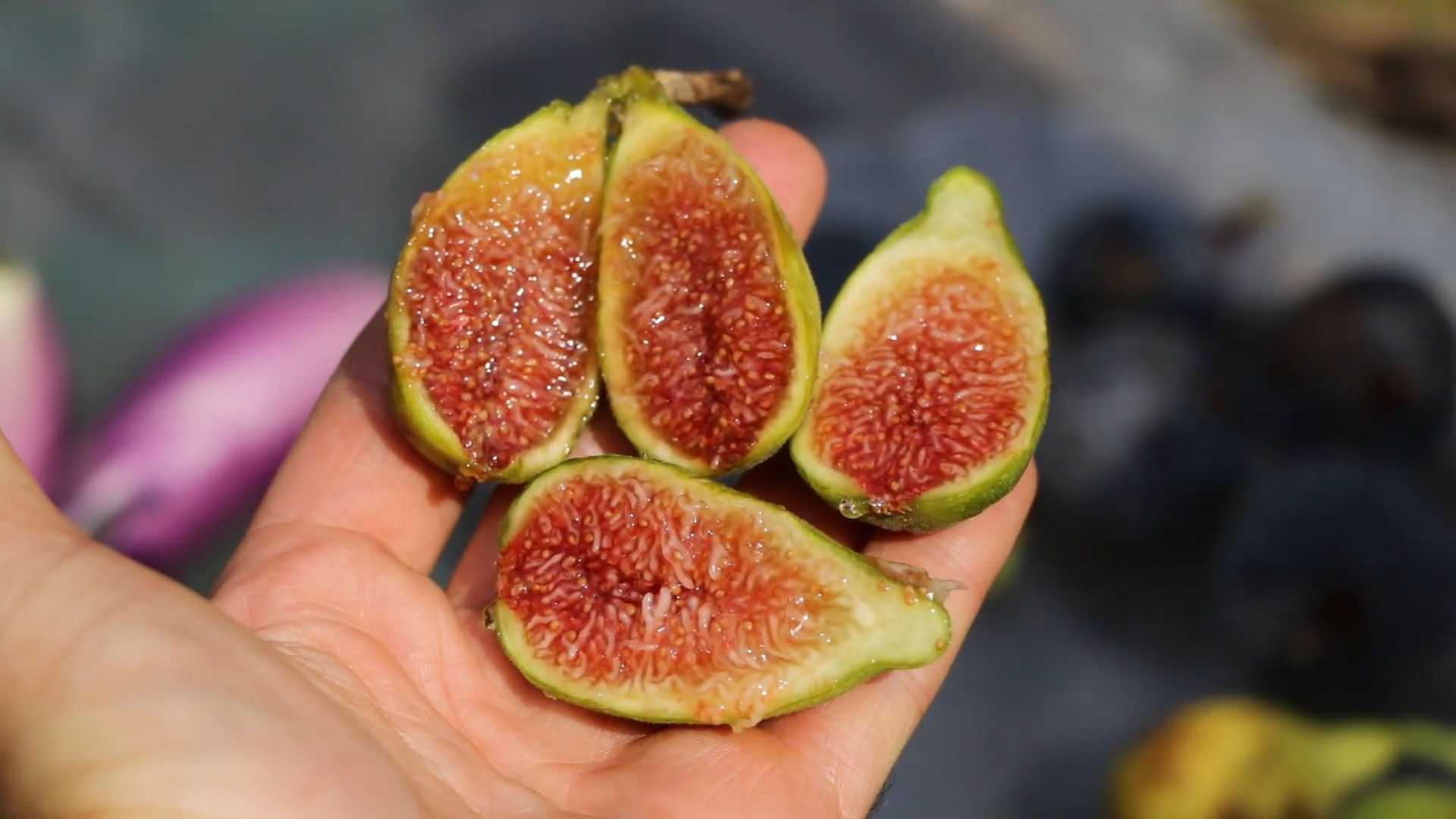

Fico Salame, Fico Salami, Salam, and Salam Piacentino are all the same variety. Originally imported to the US by Mario in CT, he visited Paolo Belloni at Pomona Gardens in Puglia, where he collected cuttings. The name was mixed up along the way. Instead, the correct name is Salam Piacentino.
In 2023, I met Francesco Omezzolli, the man who named Nerino and Verdolino. Well ahead of his time, he was a modern-day Gallesio learning about special varieties of fruits and nuts in Italy. The Verdolino fig variety is commonly found around the Lake Garda area. Mattia Omezzolli, Francesco's nephew and operator of Omezzolli nursery, has an interesting theory that a very small number of seeds from unpollinated figs can germinate. Sergio Carlni, another well-respected fig enthusiast in Italy, calls this parthenogenesis. A theory that he proposed to the University of Pisa.
Before visiting the region in 2023, I assumed that the fig wasp must be present in this area. Even in low numbers. There’s a Hungarian paper demonstrating that the fig wasp can survive temperatures of 12-14F. However, it’s apparent that on my visit, the fig wasp was not present.
There’s also another piece of information to understand this mystery. Similar to the many Celeste and Hardy Chicago strains, Verdolino also has a number of slightly different strains in Northern Italy. One of which I have firsthand experience with is called Fico Salame. Comparing them side by side, in 2024, they had the same flavor profile, but Salame is noticeably larger with a different shape and an entirely different leaf pattern. Could this simply be a mutation, or are Mattia and Sergio onto something? After all, a seedling with one parent would produce very similar offspring.
Nonetheless, Verdolino and its sub-types are without a doubt the best you can grow in humid, cold, and short-season climates. It's one of the most rain-resistant varieties on this list. It has a short hang time and superior drying capabilities. You’ll get an impressive fig almost every time. It’s also exceptionally hardy, and early, and Verdolino produces a reliable breba. The shape is long, slender, and the stem length is very similar to Moro de Caneva. It's almost like the green version of Caneva.
In 2021, I compared the eating experience to the Coll de Damas. It’s exceptional. In 2023, Verdolino was one of the few to still taste great even after a long rainy period. In 2024, I realized that the drier the soil is, the better these figs will taste. Similar to Teramo, it's quite an improvement from Verdolino trees growing in pots.
